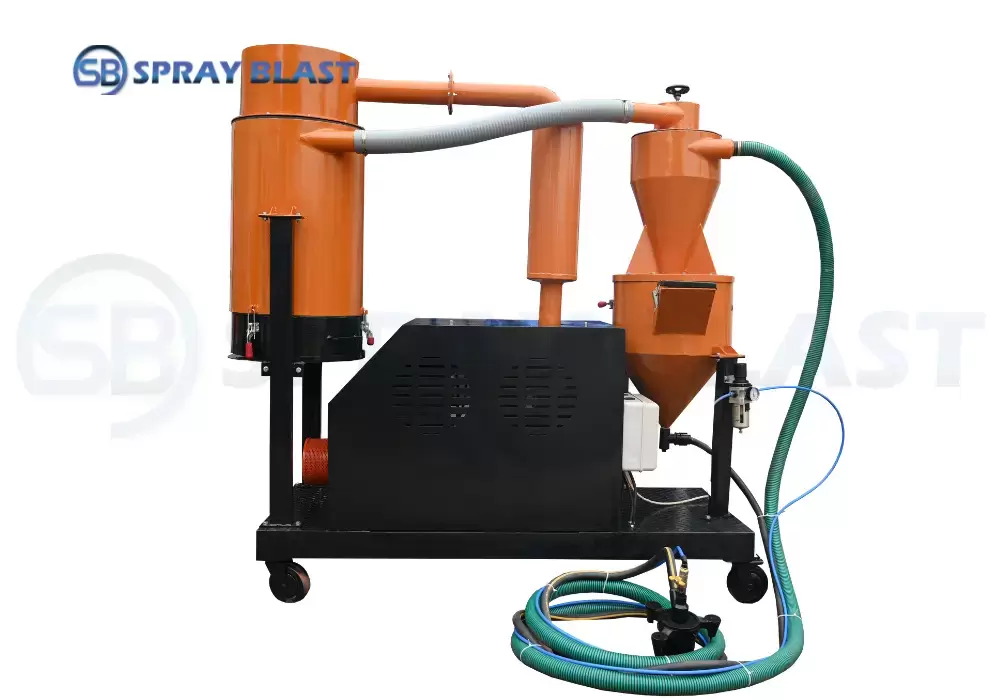
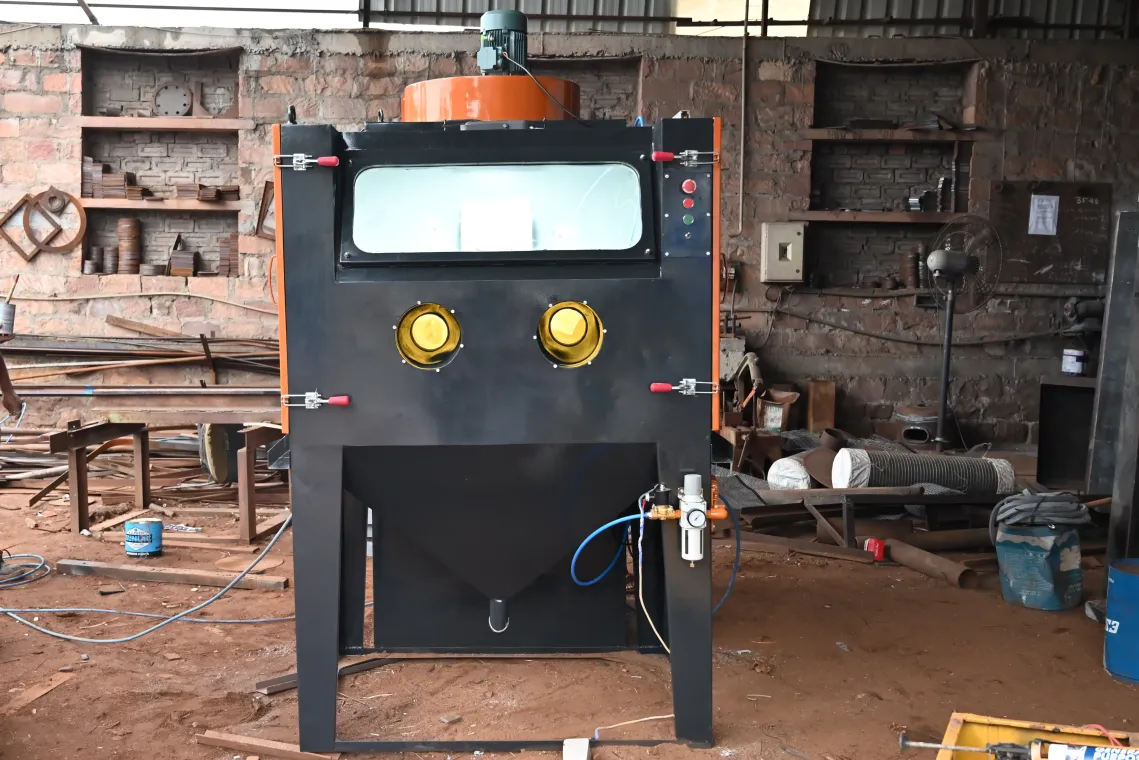
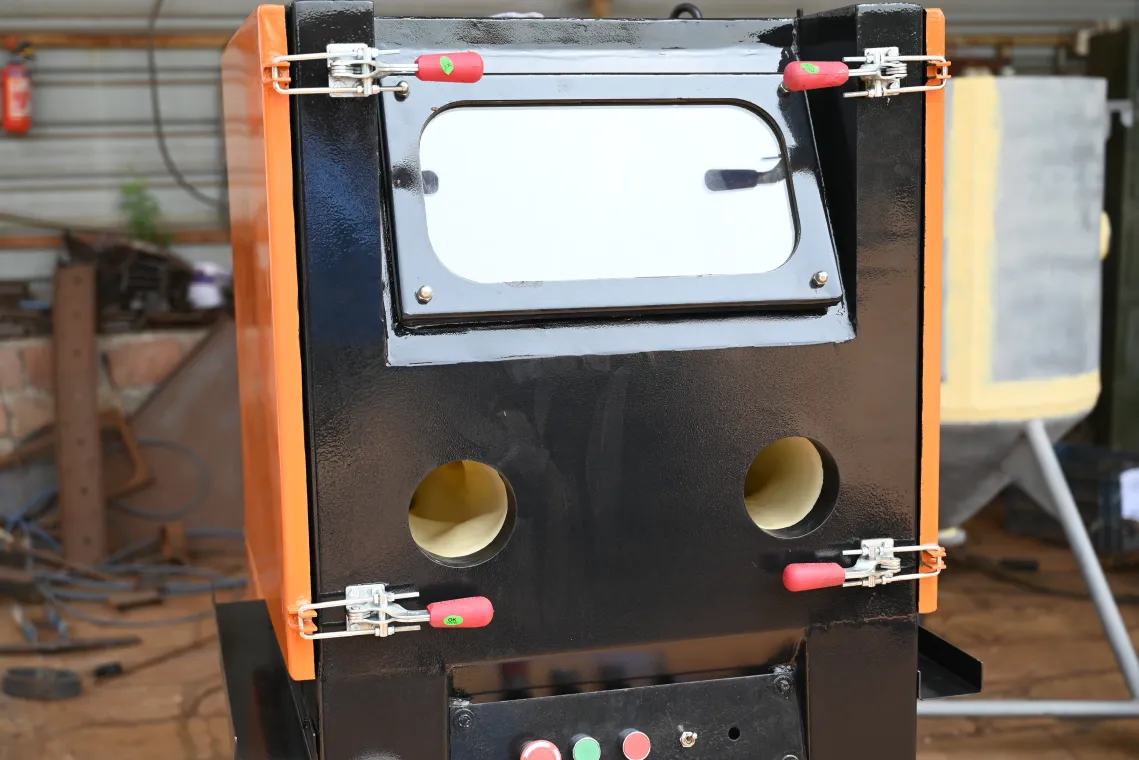
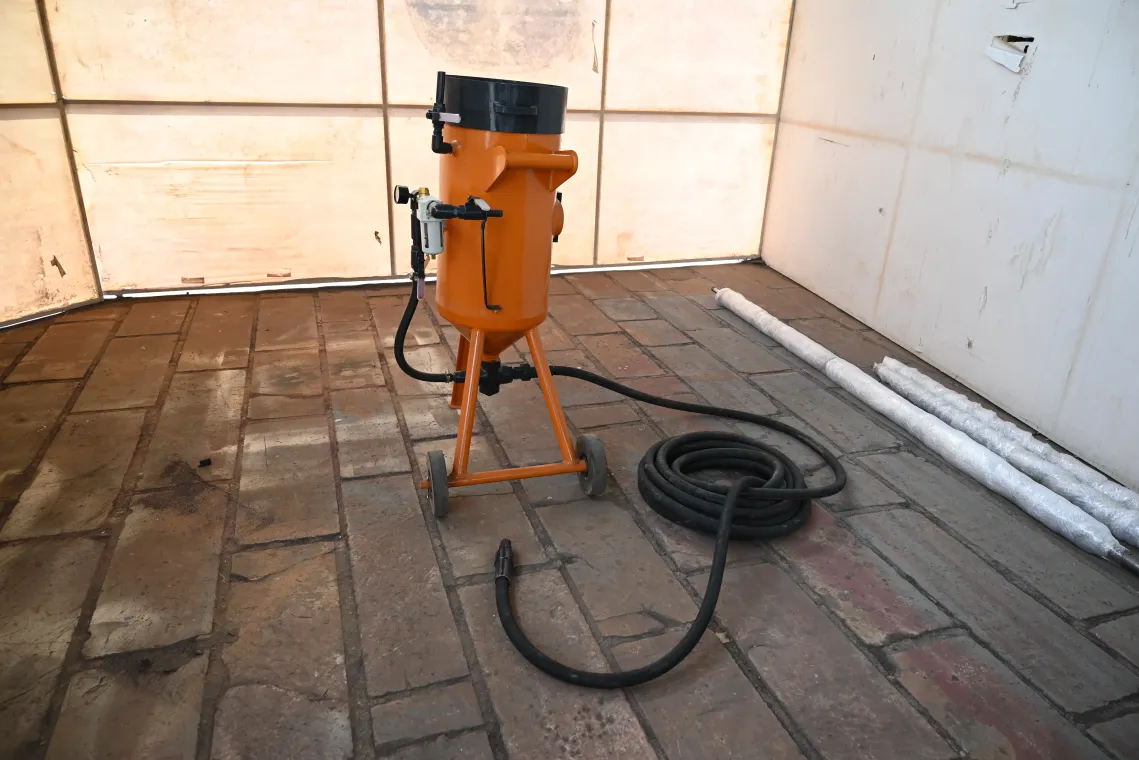
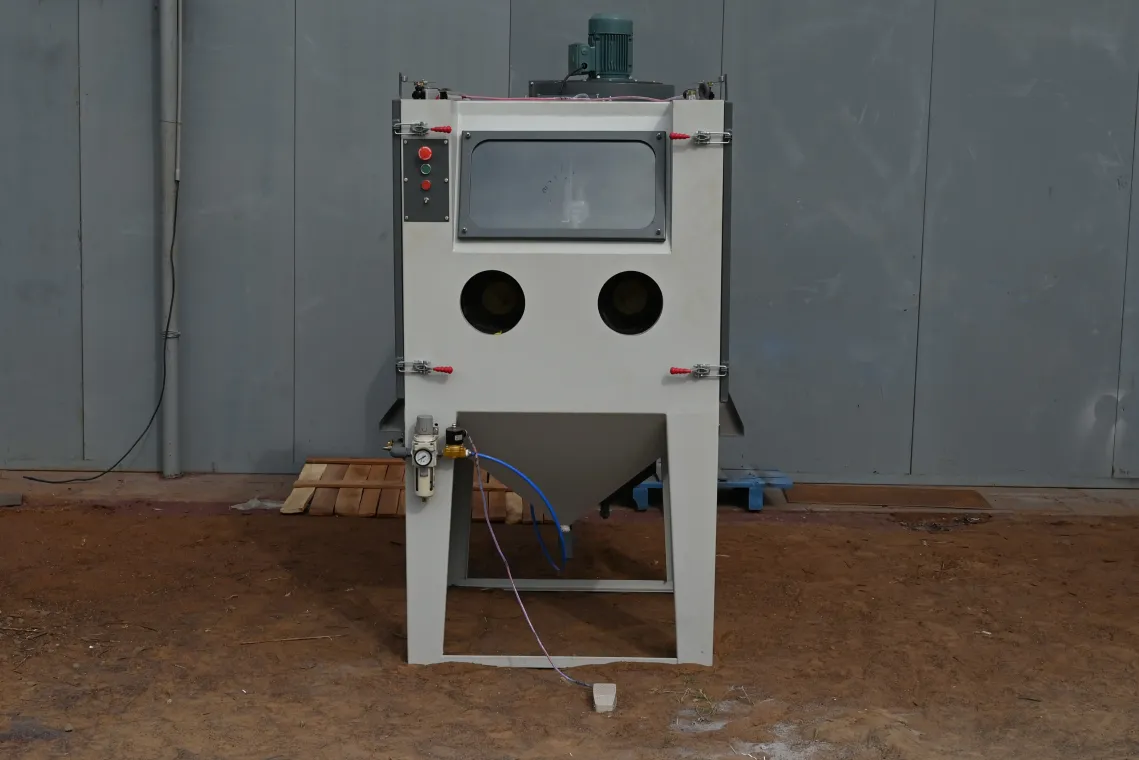
All the vacuum blasting machine suction types are designed to provide closed-system blasting by making the blast a small “containment structure”. This speeds the job along, whether you are doing large-scale cleaning or just spot blasting. The removed coating and corrosion, plus the spent abrasives, are all deposited into a closed waste compartment. A vacuum blasting machine, suction type, offers the benefits of dust-free blasting while providing reliable performance for light to medium-duty surface cleaning. It is an essential piece of surface preparation equipment for operations where cleanliness, portability, and environmental compliance are top priorities.
In modern industries, surface preparation must be both effective and environmentally responsible. Traditional open blasting methods, while fast, often release large amounts of dust and abrasive media into the air, posing health risks to workers and creating costly cleanup requirements. To overcome these challenges, many industries are turning to vacuum blasting machines (suction type).
Rather than using a pressure blast vessel, the blast media is “lifted” from the machine by a vacuum generated at the blasted surface, blasted onto the surface being cleaned, and then vacuumed back into the unit for dust removal and reuse. The recovery vacuum generator for this model is available in a pneumatic as well as an electric execution. The electric-powered model is used in situations where the available compressed air source is limited.
Components of a Suction-Type Vacuum Blasting System
- Blast Head with Vacuum Shroud: Directs abrasive and recovers debris simultaneously.
- Abrasive Storage Hopper: Holds blasting media ready for suction into the blast stream.
- Venturi Nozzle: Creates suction to pull abrasive from the sand blasting hopper.
- Vacuum Recovery Unit: Generates suction to recover abrasive and dust.
- Abrasive Separator: Removes dust and debris from reusable media.
- Dust Collector: Traps fine particles to prevent environmental release.
How the Suction-Type Vacuum Blasting Process Works
- Compressed Air Supply: Air is directed through a venturi nozzle, creating suction that draws abrasive from the storage hopper.
- Abrasive Delivery: The abrasive is mixed with air and propelled toward the target surface.
- Surface Cleaning: The abrasive impacts the surface, removing rust, paint, or light contaminants.
- Simultaneous Recovery: A vacuum shroud surrounding the sand blasting nozzle captures the spent abrasive and dust instantly.
- Separation & Reuse: The abrasive is cleaned and returned to the hopper for reuse, reducing material costs.
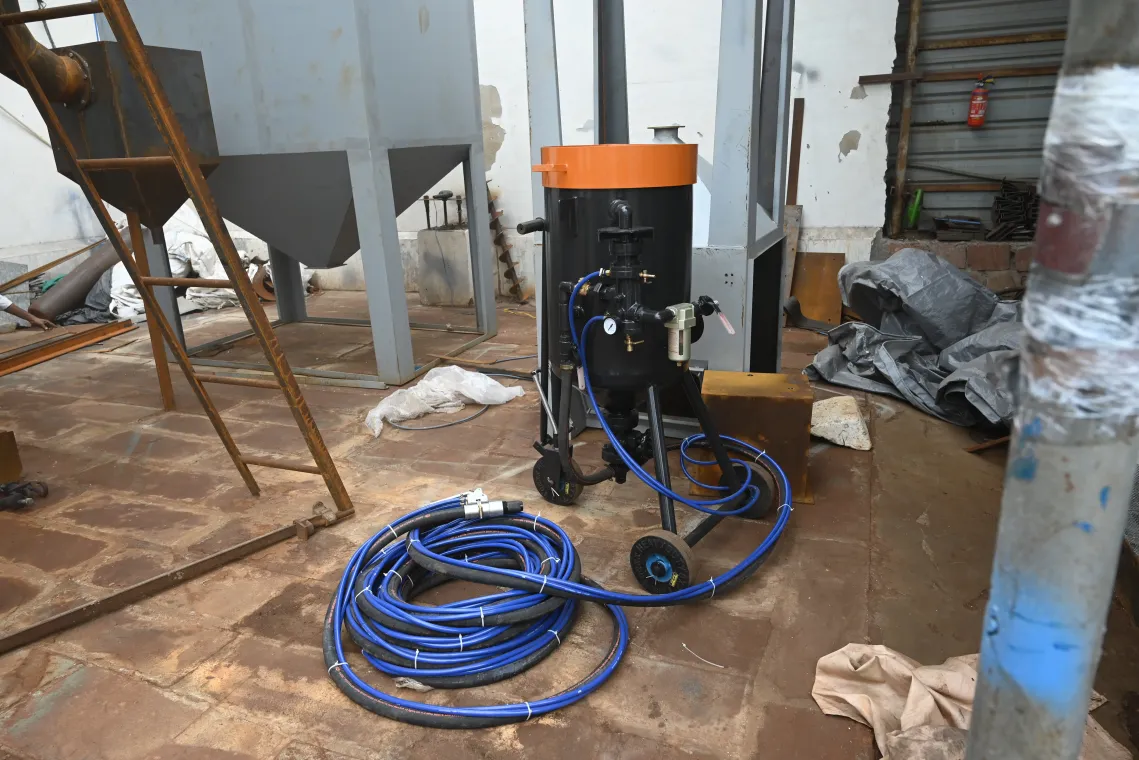
Working with a blasting pressure as low as 1 bar and as high as 7 bar with the same equipment is possible thanks to a specific valve on the pressure vessel. Vacuum blasting is a technique that can be utilized on sensitive blasting operations that require low pressures. A vacuum blasting machine has a standard, special lightweight blast head, blast and vacuum hose assembly, and a set of brushes for treating flat surfaces. Brushes are made with particularly unique fibers that offer maximum performance and economy.
Advantages of a Suction-Type Vacuum Blasting Machine
- Dust-Free Operation: Ideal for indoor or confined spaces, the closed-circuit design keeps airborne dust to a minimum.
- Portable & Lightweight: Suction-type machines are typically more compact than vacuum blasting machine pressure type, making them easier to transport and set up on job sites.
- Lower Operating Costs: By recycling abrasive, the system reduces the amount of new media needed.
- Gentle on Surfaces: Lower impact velocity makes it suitable for delicate surfaces such as aluminum, stainless steel, and thin sheet metal.
- Simple to Operate: With fewer high-pressure components, suction systems are easier to maintain and operate.
Vacuum blasting machine provide a dust-free, easy-to-use, adaptable, and powerful blasting option that is also environmentally benign.
Vacuum blasting equipment is ideal for a variety of applications, including surface preparation prior to coating, and can be operated by just one person. The blasters use pressure vessels in conjunction with compressed air filters and pressure regulators to ensure that blasting operations are completed quickly and in a dust-free environment. Abrasive is recovered automatically and promptly for reuse. There will be no flying dust or abrasives to contaminate the environment.
Suction Type Vacuum Blasting Machine In India
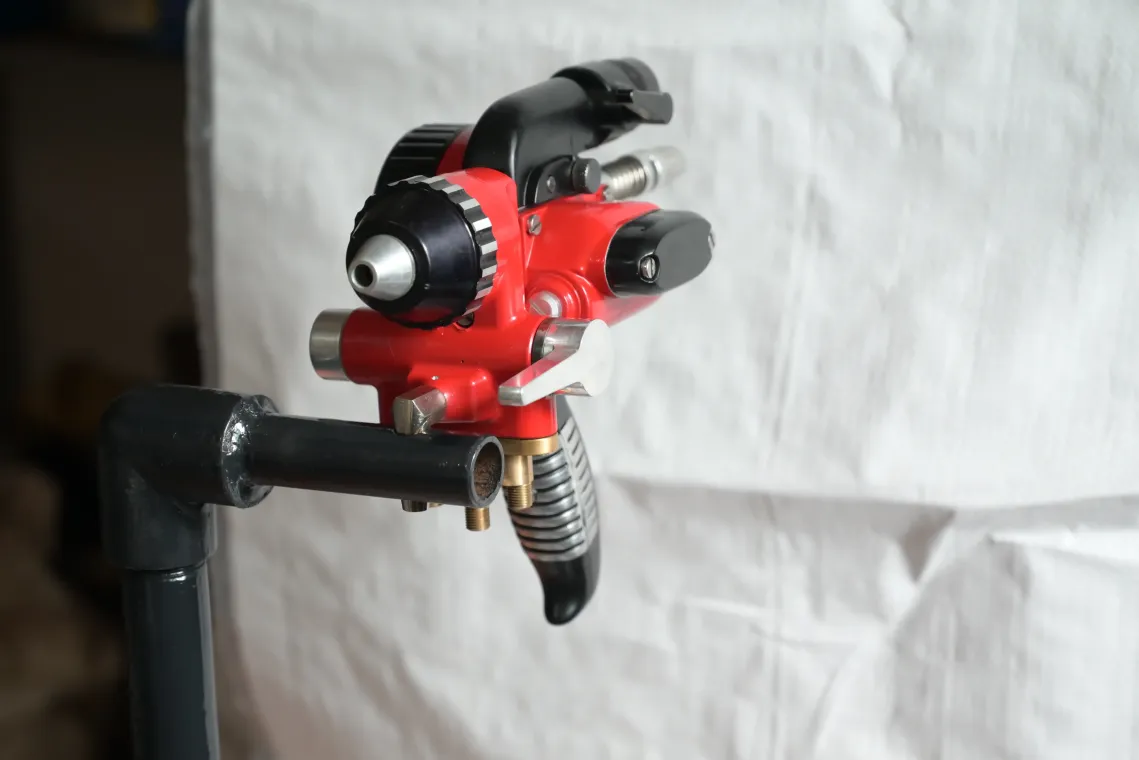
We offer premium-quality vacuum blasting machines suction type in India, along with a wide range of industrial blasting and coating equipment. Our product line includes sand blasting machines, shot blasting machines, grit blasting machines, shot blasting cabinets, vacuum blasting machines, pressure type, dustless blasting machines, thermal spray guns, thermal spray wire, metalizing wires, and more. Explore our complete range at sand blasting hopper in Jodhpur, Rajasthan, India, where we are committed to delivering the highest quality products and reliable service.