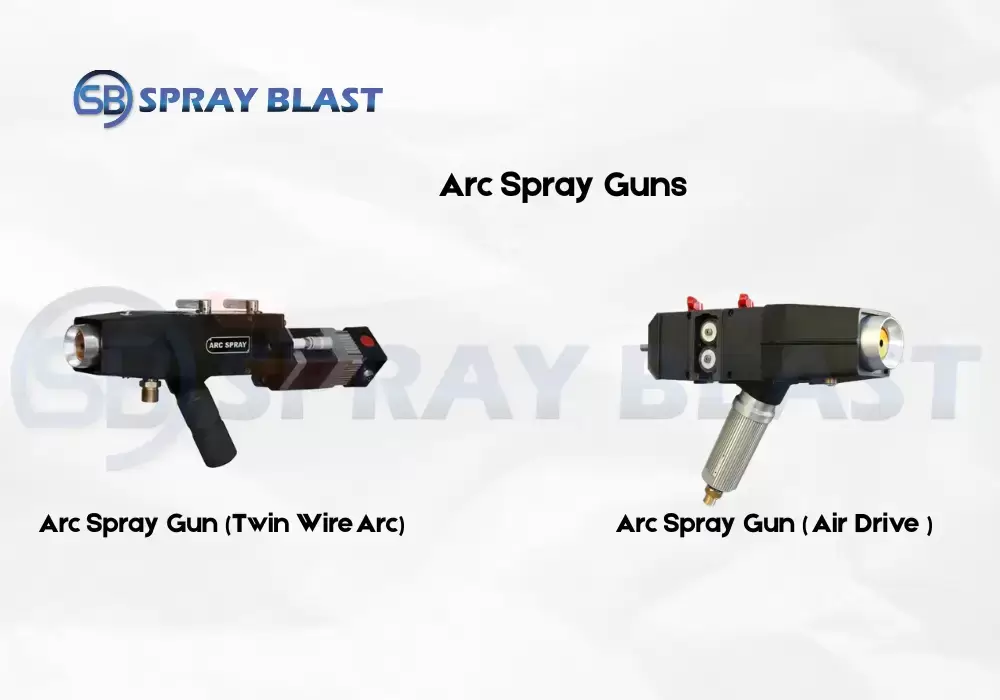
An arc spray gun is one of the most popular thermal spray guns in the surface engineering field. It works by producing an electric arc between two consumable wires. The arc melts the wire tips, and compressed air atomizes and drives the molten droplets onto the prepared surface, resulting in a protective or useful coating. Because of its rapid deposition rate, low cost, and great adherence, the thermal arc spray equipment has become the industry standard for corrosion protection, wear resistance, and restoration purposes.
Working Principle of an Arc Spray Gun
The arc spray gun operates by inserting two consumable wires (zinc wire, aluminum wire, nickel wire, or copper wire) into the gun. When a direct current (DC) power supply creates an electric arc between the wire tips, the material immediately melts. A stream of compressed air atomizes the molten droplets and sprays them at high speed onto the surface, resulting in a dense, adherent covering.
This approach, unlike a flame spray gun, is flameless, making it safer for many industrial applications. The thermal arc spray system is also more efficient than traditional painting or galvanizing because it does not peel, blister, or rust, resulting in long-term endurance.
.webp)
Image: shown Working of Arc Spray Gun (Air Drive)
Advantages of Arc Spray Guns
- High Deposition Rate: faster than flame spray and metalizing guns.
- Cost-effective: Ideal for huge constructions with continuous operations.
- Excellent Adhesion: Coatings adhere strongly to steel, aluminum, or cast iron.
- Versatile Material Choice: Use zinc wire, aluminum wire, copper wire, babbitt wire, or nickel wire.
- Low Heat Input: When compared to welding or plasma spray, the substrate experiences minimal distortion.
- Eco-Friendly: No solvents are used, and fume emissions are lower than those from painting.
- On-Site Applicability: Portable technologies allow pipelines, bridges, and marine vessels to be coated on-site.
Materials Used for Arc Spray Guns
Arc spray guns are compatible with a variety of thermal spray wires. Some typical options are:
- Zinc Wire: Zinc wire is ideal for galvanic corrosion protection on steel bridges, pipelines, and maritime infrastructure.
- Aluminum Wire: Aluminum wire offers corrosion and oxidation resistance in offshore and aerospace applications.
- Copper Wire: Copper wire is used as an electrical conductivity coating on commutators, connections, and electronics.
- Nickel Wire and Nickel Aluminum Wire: Used for bond coatings, conductivity, and high temperature resistance.
- Babbitt Wire: Used to restore worn bearings and machine components.
- Bronze Wire: Bronze wire is used for electrical, maritime, and ornamental coatings.
- Molybdenum wire: Molybdenum wire provides excellent wear resistance for automotive equipment such as piston rings and synchronizers.
Industries Using Arc Spray Guns
- Hulls, decks, propellers, and offshore oil platforms are all examples of marine industry products.
- The oil and gas industry includes subsea pipes, tanks, drilling rigs, and refineries.
- Turbine parts, landing gear, and heat-resistant components are examples of aerospace industry products.
- Engine components include braking discs, shafts, and gears.
- Steel and metal industry equipment includes rolls, guides, and continuous casting machines.
- Wind turbine towers, hydro plant components, and generator parts are all examples of power generation equipment.
- Bridges, water tanks, and steel constructions are all part of the construction industry.
Why Choose an Arc Spray Gun?
The arc spray gun is the most cost-effective and efficient thermal spray method for large-scale applications. Unlike plasma or HVOF guns, which are more specialized and expensive, arc spray is suited for general-purpose industrial coatings, including corrosion protection and restoration. With its great efficiency, low operating costs, and capacity to spray a wide range of materials, it continues to be the preferred choice for businesses around the world.
Arc Spray Gun Price
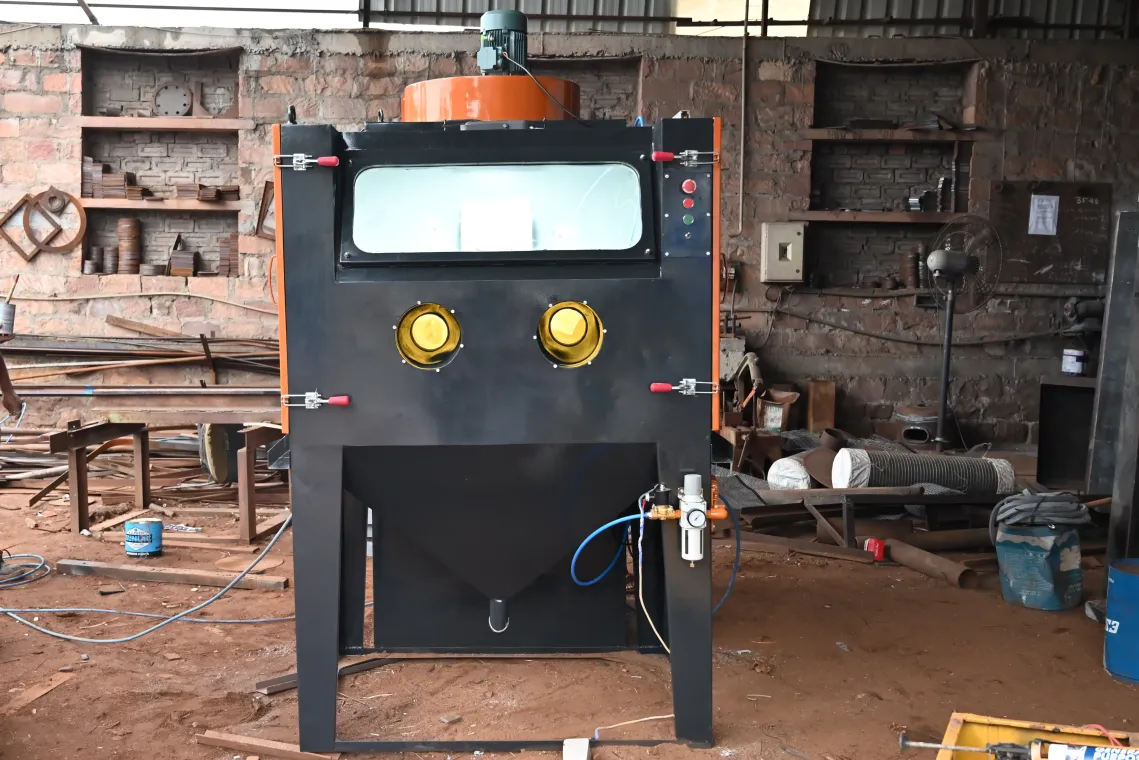
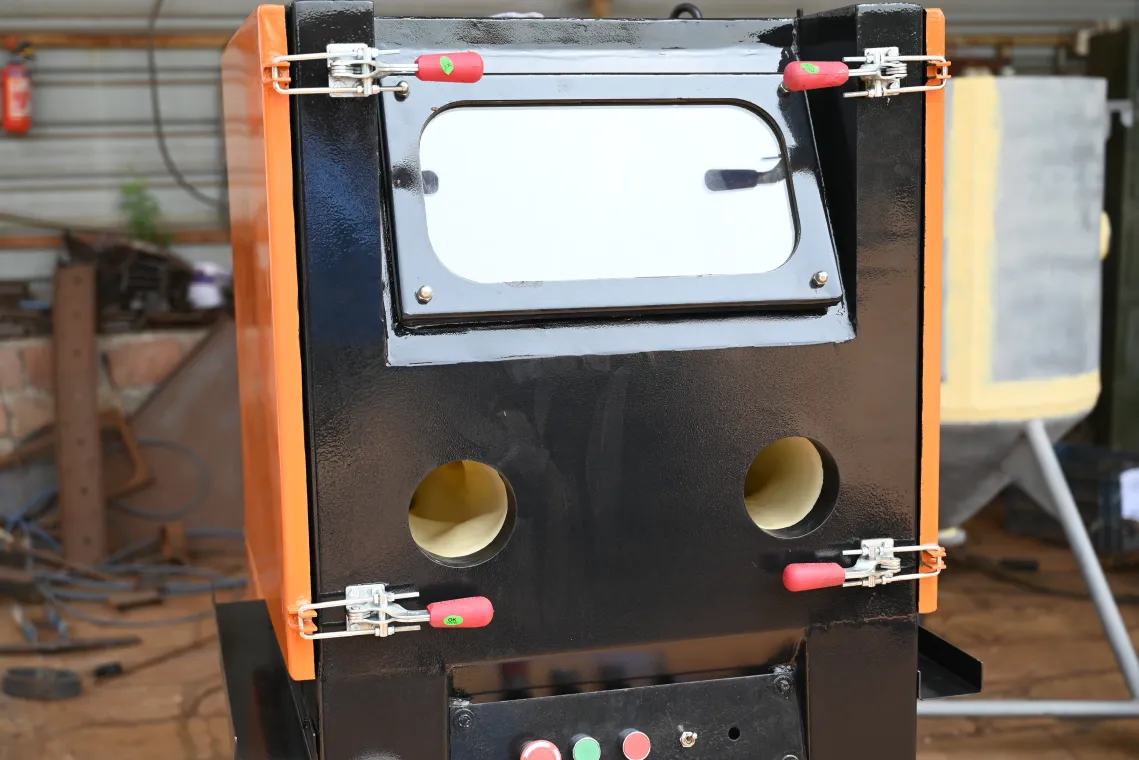
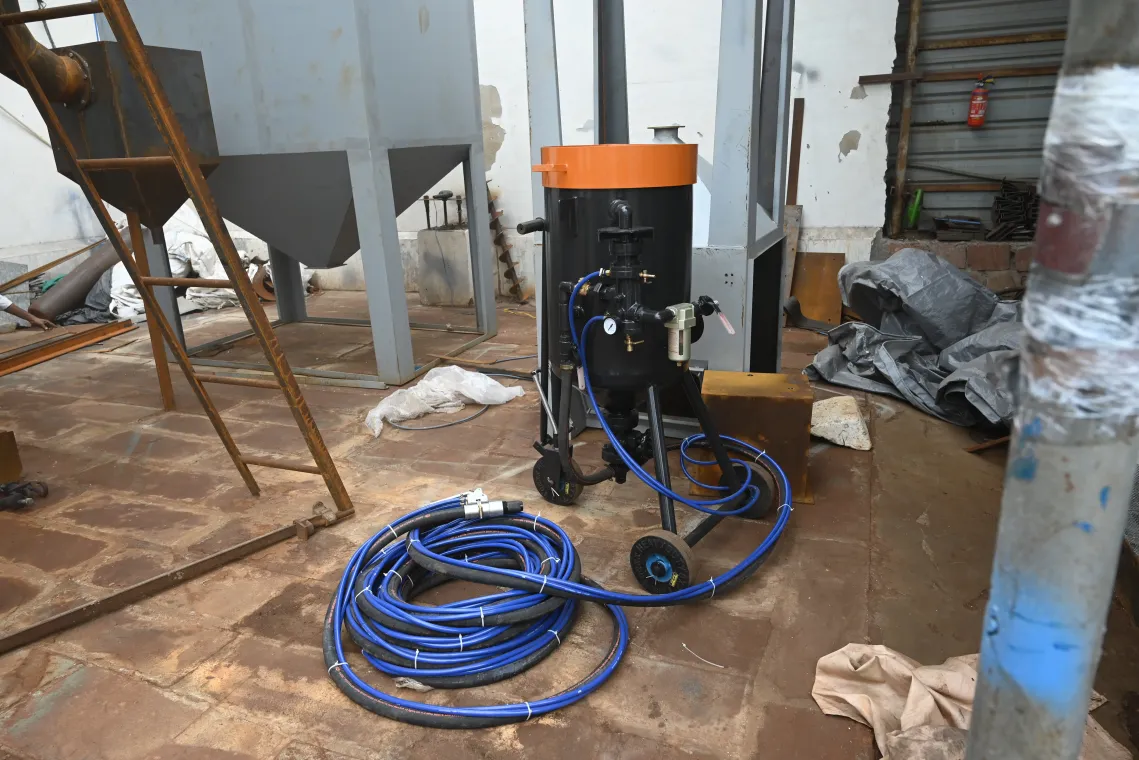
The arc spray gun price varies depending on the model, capacity, and included accessories such as power supply units, wire feeders, and control systems. Our arc spray gun price is low compared to others. Spray Blast is one of the best arc spray gun manufacturers and arc spray equipment suppliers globally. We offer an arc spray machine, arc spray system, metalizing gun, flame spray gun, thermal spray gun, thermal spray wire, abrasive blasting machine, sand blasting machine, portable sand blasting machine, shot blasting machine, stone shot blasting machine, vapor blasting machine, wheel blasting machine, dust collector, air compressor, powder feeder, abrasive media and mineral powder etc.